Abstract
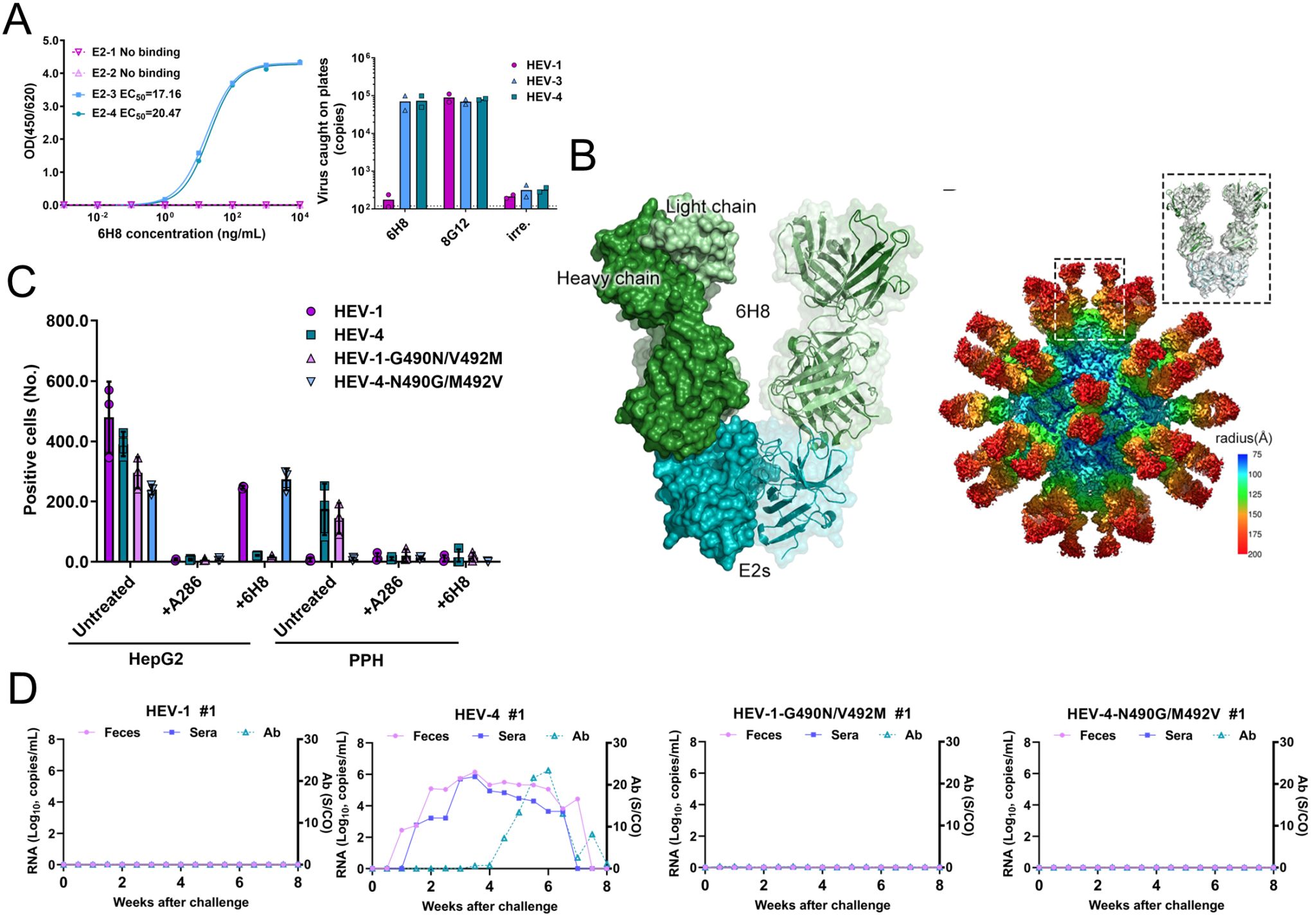
Hepatitis E virus (HEV) is a significant pathogen causing acute viral hepatitis globally, posing a particular threat to pregnant women. HEV infects a range of host species, with distinct genotypes exhibiting genotype-specific tropism for different host hepatocytes. The P domain of viral capsid protein plays a central role in host cell attachment, but the molecular determinants that govern its host specificity remain unclear. This study investigates the molecular mechanisms underlying HEV host tropism by using a zoonotic HEV specific antibody 6H8. An epitope involving residues 490 and 492 is identified crucial for both mAb 6H8 binding and virus-cell attachment. Structure-based mutagenesis, molecular dynamics simulations, virus-cell attachment assays, and viral infectivity assays highlight the importance of the N490 and M492 residues in maintaining the structural integrity of the 6H8 epitope, influencing host specificity. Mutations at 490 and 492 permit HEV-1’s and disrupt HEV-4’s binding and infection in porcine hepatocytes. However, they are insufficient alone for reestablishing swine infection in vivo, indicating additional factors are involved in HEV’s host tropism. Our findings suggest that N490 and M492 are critical but not sole determinants of HEV-4’s specific tropism for porcine hepatocytes and advance our understanding of HEV’s zoonotic transmission and host specificity.
Link:https://www.nature.com/articles/s41467-026-69125-5