Abstract
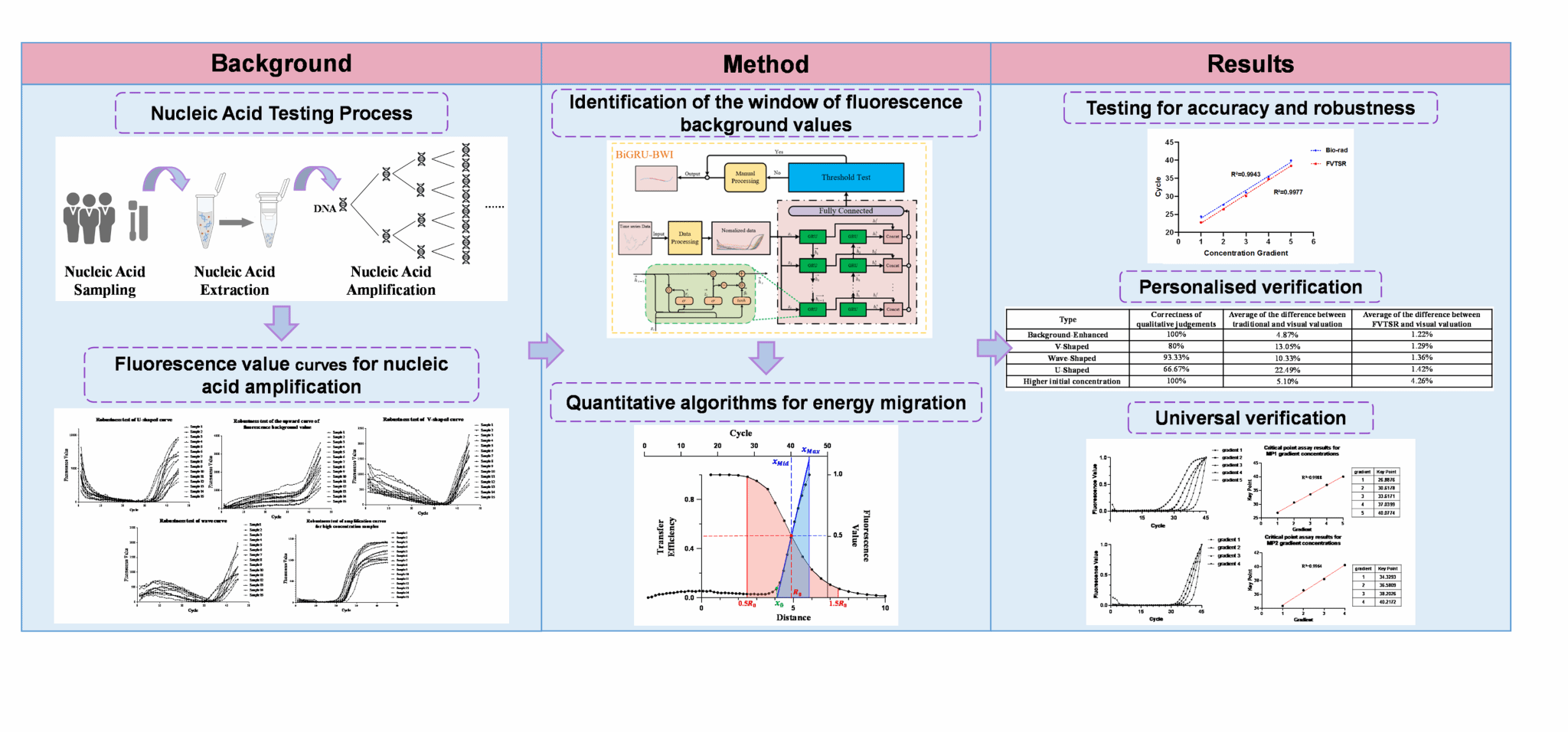
Nucleic acid testing is widely used in tumor screening, genetic disease detection as well as prenatal diagnosis, and it especially plays a significant and irreplaceable role in detecting and controlling outbreaks or new infectious diseases. Currently, nucleic acid detection instruments measure target concentrations primarily through optical detection techniques. The characterization of the relationship between optical signals and biochemical reactions is a key technology of current nucleic acid detection instruments. Usually, the number of target gene fragments in a sample is very small, and gene amplification by fluorescence quantitative polymerase chain reaction is currently the most widely used detection method for clinical nucleic acid detection instruments. As the sequence and length of target gene fragments, amplification bio-reagent systems, sample types and amplified light detection systems vary, fluorescence value assessment needs to meet individual testing requirements. In addition, large-scale universal screening efforts pose an even greater challenge to the generality of assessment methods when targeting different detection scenarios for the same virus. The fluorescence value-target sequence replication rate relationship model proposed in this paper is both personalized and universal, and can accurately assess the results of nucleic acid testing based on fluorescence values.
Link:https://doi.org/10.1093/bib/bbag297